Part one of two
The other day I was reading a great post over at “Make it Like a Man” about breakfast hash. In Jeff’s post Old-Fashion Hash is an excellent breakfast he mentions the famous Michigan Pasty. A pasty is “meat hand pie” or hash in a pastry.  Now this got me thinking, as the last time I had a Michigan Pasty was a bit ago when hunting in the Upper Peninsula with some Canadian colleagues and a grumpy local guide. The guide however, was soon forgiven for his brash demeanor when he pulled out a bag of Pasties for us to munch on. OK, you’re thinking what the heck does this have to do with Siberian memories.
Well, that Pasty memory got me thinking about a special trip to Siberia that I made in my past life. It was a wonderful journey that I’ll always treasure. Don’t worry, I’ll tie it all together in the end. So, I hope you read on and find out what Siberian memories have to do with Pasties. But if you just wish to see the Pasty recipe just Jump to Recipe.
Siberian Memories
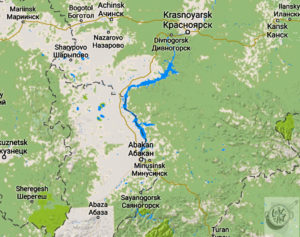
The area of Siberian that I traveled in (from Google Maps).
The part of Russian Siberia that my travels brought me to was in the southern region, not far from Mongolia and Kazakhstan. When one thinks of Siberia, we think of this harsh bitterly cold place no-one wishes to live in. A place of forced labor camps that were built beginning in the Stalin years where many died building the new Soviet Union and the dreaded gulag (prison), a place of imprisonment for party political opponents and those who fell from favor of the communist government. I assure you, it was not a situation or place you’d want to experience. The gulags, where many perished are now gone. Although, many of the structures still stand, but few can visit.
Southern Siberia is lovely, with beautiful forest and vast mountains. Crystal clear steams to fish in and Dachas (cabins) and Banyas. Oh, it gets cold, I remember a cold January day in Syanogorsk when the temperature was −27.0 °C (−16.6 °F), but that was another trip.
Krasnoyarsk Conference
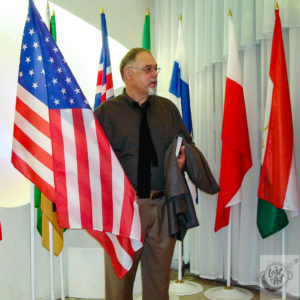
A much younger and smaller me!
This trip begins about 10 years ago in late September and the weather was chilly but fantastic. I was in Siberia for a conference, award presentation and some R&R (rest and recuperation). It all began with a grand banquet welcoming attendees from around the globe.  We had so many courses at dinner that evening that I lost count and the libations flowed freely. My host Dr. Aleksandr PROSKIN and I enjoyed Russian wine, chilled vodka and brandy. After dining, we were entertained in grand Siberian fashion with traditional dancing and a young group of Russian boys singing and marching to patriotic songs. It was quite a festive evening.
An interesting side note, my host for the visit Dr. Aleksandr PROSKIN (or Sasha as his friends call him). Sasha was born on the same day of the same month and the same year as me. That in itself, made us great friends. It was fun to compare what our lives were like in our early years.
Rest and Recuperation
As a surprise, Sasha, had arranged for a weekend in the nearby mountains, about a day’s drive from the city. It was to be Sasha, his wife, Olga, Boris her hubby and Prof. Peter POLYAKOV. So, early that Friday morning the five of us piled in to Boris’ 2005 Lada Niva and headed into the Siberian wilderness. Luckily, I snagged the front seat. We headed North out of Krasnoyarsk along the Yenisei river, after about an hour we turned and headed into the mountains. Then, after a bit, we stopped at a National park for a lovely walk in the Siberian forest. I was amazed at how the Siberian forest was so like the forests of Northern Quebec.
 It was the beginning of fall and the colors of the leaves were stunning. A lasting memory.

Memories of fragrant birch forest come to mind. It was fresh, the air was fresh and woodsy smell emanated through the trees. This area is famous for extreme rock formations, they were amazing. After our hike, we strolled back to the Lada and enjoyed a quick coffee with a shot of brandy before heading onward towards the dacha.
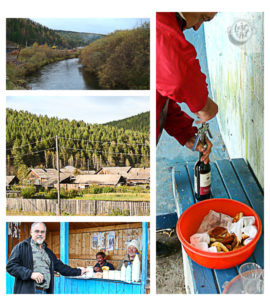
As we drove through the countryside, peaceful weather-worn wooden villages appeared on the hillsides. The people always waved and smiled. My fellow travelers explained how these villages were the Siberian indigenous people who were oppressed during the Soviet era. At one of the villages we stopped at a roadside market to buy some vegetables, fresh Yak milk and Yak butter for our meals. Olga used the milk to make a sour type cream that was quite good. The butter, well it was very musty, but good. We also bought a bag full of leafy lettuce like veggies. Those were eaten raw, with one’s hand, dipped in different sauces. Oh, and the things in the red bowl in the image above (above lower right) are Belyashi. We had stopped at a rest area for a chilled glass of sweet red Russian wine and a Belyashi or two, but more on the Belyashi later, first we need to get to the Dacha.
What’s a Russian dacha? Wikipedia defines a dacha as a seasonal or year around house that lies away from the cities center. Here in Sweden we would compare the Dacha to our Sommarstuga (summer homes). In North America, one would refer to it as a cabin in the mountain or weekend home and many other terms. In the UK and Australia, I think they would be called holiday cottages or summer cottages.
And that my friends, is how I got from Pastes in Michigan to Belyashi in Siberia. But, the grand time at the Dacha and the experience in the banya will have to wait for part two. I promise not to bore you in part two. They’ll be stories of fine Siberian foods, naked men in the banya, jumping into the icy water of the nearby streams, singing, dancing and so much more. We’ll even show you how to make the famous Russian hand pie the Belyashi or meat Pirozhki as they’re often called. The next part will follow this edition in about a week, so stay tuned. Also, for those that have an interest in making the Michigan Pasty, the recipe is below.

Chloe says, “These are sooooo good, you gotta try one!”. This recipe has been taste tested by Chloe and is approved for Dog and human consumption and has received her coveted 5-paw rating. 🐾🐾🐾🐾🐾
Thanks for reading Part One of Siberian Memories of a Dacha, Banya & Russian Belyashi. Part two is in the works!
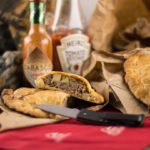
Madelyne Lawry's Pasty Recipe
My Swedish adaptation of the authentic Michigan Yooper Pasty, based on the recipe from Madelyne Lawry. The Lawry family have been feeding Pasties to folks in the upper and lower peninsula of Michigan (USA) since 1946. A Pasty is a wonderfully tasty baked hand meat pie.
Ingredients
The Crust
- 2 cups (4.75 dl) Flour.
- 2/3 cups (1.66 dl) Crisco, lard or margarine (Milda in Sweden), see note 1.
- 1/2 tsp (1/2 tsk) Salt.
- 1/2 cup (1.25 dl) Cold water.
The Filling
- 12 ounces (340 g) Ground (minced) beef. See note 2.
- 1/2 cup (1.25) Onion, finely chopped.
- 1/2 cup (1.25 dl) Rutabaga or Swede (kålrot), grated.
- 3 cups (7 dl) Waxy potatoes, such as Yukon Gold, Yellow or red. Diced about 1/4" (6mm)
- Salt and Pepper, to taste.
- 2 tbsp (2 msk) Dried Parsley, or 1/3 cup (3/4 dl) fresh minced.
- 1/2 cup (1.25 dl) Milk, for use in assembling the Pasty.
Condiments
- Ketchup.
- Hot sauce of choice.
Instructions
The Crust Dough
-
The crust dough is a supper simple dough to make and can be mixed in a stand mixer, hand mixer or by hand. It will be a wet and somewhat sticky. (See Note 3)
-
Mix the flour and salt in your mixing bowl. Next, cut in your Crisco, lard or Milda into the flour mixture.. This can also be done by your mixing blades. Just add pieces of your fat of choice slowly.
-
Once the Crisco, lard or margarine is thoroughly cut into the flour the dough is ready to mix. Add the cold water and mix until you have an elastic dough.
-
Now, the dough must be kneaded, yes kneaded. You can do this by hand on a well-floured board or using your electric mixer. If using an electric mixer, use the dough kneading hook (hooks). Continue kneading until you have an nice soft dough. Be careful to not use too much flour if hand kneading.
-
Divide the dough into four equal sized balls (see note 4) and refrigerate for at least an hour.
The Pasty Filling
-
Begin by preheating Oven to 400°F (205°C) or gas mark 6 for my mates in the UK.
-
After the dough has chilled for an hour, your ready to toss together the filling. In a large bowl, break the meat into small pieces. Then, add the rest of the filling ingredients (except salt and pepper) and toughly mix. (See note 5).
-
Next take you four balls of chilled dough and roll them into a circle a circle about 8' (20 cm) in diameter.
-
Now, using a pastry brush, brush milk around the rolled out dough's edge (about an half inch in). This will ensure a good seal.
-
Place 1/4 of the filling mixture (about a cup) in the center of each piece of rolled out dough.
-
Now, rollover the dough making a half moon and seal all of the edges with a fork. You can also use a pinch seal instead of the fork sealing method.
-
Place the pasties on a parchment paper lined oven pan and cut two vertical slits about a 1/2" each in each pasty.
-
Brush the top of the pasties with milk and bake for 25 minutes on the bottom shelf. After the first 25 minutes take out the sheet and rotate 180 degrees, replacing it in the middle shelf of the oven. During the last 10 minutes watch that the crust isn't getting too brown. Cover with aluminum foil in needed.
-
When the pasties are done, remove them and cool for at least 10 minutes, then serve. Pasties are traditionally served with ketchup and hot sauce, but use whatever rocks your clock.
Recipe Notes
Please note that the quantities can be changed by entering the amount you wish in the quantity indicator. However, the metric will not change.
- If using Crisco, you might like to use the butter flavored one to give the pie crust a bit more flavor.
- For your meat choice, 80% lean ground (minced) meat is best. You can also use a pork/beef blend (blandfärs). You may also substitute 1/2" pieces of beef steak, along with 1/2 cup of grated edible suet for the ground meat.
- Instead of making the crust dough you can use store bought puff pastry. However, it doesn’t give the same texture as when using the fresh dough for the Pasties.
- For making equally divided dough, I use my kitchen scale. Weight the entire piece of dough. Divide that weight by your quantity, then weigh out the pieces. As an example, if your dough weighs 567 grams (1.25 lbs) and you need four pieces, you'll need each piece of dough to weigh 141 grams or 5 ounces each.
- After mixing the filling ingredients, take a heaping teaspoon of the mixture and either pan fry it or microwave it. Then taste for seasoning and adjust as needed. Alternately, use a 1/2 teaspoon of salt and pepper when mixing.
I haven’t thought of these — and worse, I haven’t had one! — since I was a kid and we’d pile into the station wagon and travel up to Uncle Jim and Aunt Eleanor’s farm (they grew Christmas trees :)) in the UP. In the days of real lard kept in the can on the back counter by the stove. And when the pasty is still warm from the pan… heaven. (That farm had a mostly downward-sloping driveway from the house to the road that a kid could sled in the winter for what seemed like forever.) Okay, I’m hungry now!
Bill, thanks for share with us your childhood memories of Yooper pasties. Sounds like a great place to be when those warm pies came out of the oven. Oh yes, we had one can for lard and one for bacon grease. The lard can was in the fridge. The little metal bacon grease container set on top the stove. We’re always glad when we help someone to get in the hungry spirit.
Thank you for a nice Siberian story as all the ones I know belong to the Siberian labour camps of Stalin’s era . . .where dozens from my family and,. oh so many friends, died. The reason I happen to write this from Australia . . . Some lovely photos, Ron, and you scrub up well also . . . . Your pasties remind me of Cornish ones: I must admit I love to make mine small and am certain Swedish cooks make them pretty much the same as the Baltic ones across the Gulf . . . . looking forwards to next week or so 🙂 !!! . . . [Chloe: tummyrub time!]
Although not mentioned in the post, I actually got to tour a gulag outside of Krasnoyarsk. The stories they told were very grim. At that time, it wasn’t open to the public, but was in extremely good condition. No pictures were allowed and I’m not sure I would have taken any if I could have.
As for the pasties, you are very correct. The pasties came to the Upper Peninsula (UP) of Michigan over a hundred years ago via immigrant Cornwall miners. They came to the UP to work the copper and iron mines. The only difference I can find between them is that the pasties are larger than a Cornish pie and the Cornwall version is often sealed with the seam on top.
Our Swedish Inbakad köttfärsrulle (baked meat pie with butter dough) can be a single elongated stuffed pastry or a small hand pie. Typically, Inbakad köttfärsrulle is baked and cut into single servings. It’s then served with a creme fraiche, garlic and lemon sauce. The meat stuffing is a bit more involved as well.
Well I might still scrub up well, but it takes a bigger bar of soap than it did 10 years ago.
Thanks for the comment and consider that Chloe belly rub delivered.
That’s a really authentic pasty recipe! Some people skip the rutabaga, which is fine with me, but traditionally they do include them. I like them with gravy and/or sour cream, but ketchup … reminds me how I ate them when I was a kid. My understanding is that originally, pasties were stuffed with yesterday’s leftovers, and I’d like to experiment with that idea. Imagine Thanksgiving leftovers in a pasty?
Thanks for liking to my post! I’m thrilled and humbled and thankful.
I like the way you think. What about leftover chili-mac pasties? Actually, leftover beef stew would work.
Never tried gravey, but it works in my mind. We actually made a mix of crème fraîche, with a touch of mayo and loads of fine chopped fresh dill to dip them in. I didn’t include it in the post as it a very Swedish twist.
Thanks for reading and especially taking time to comment.